


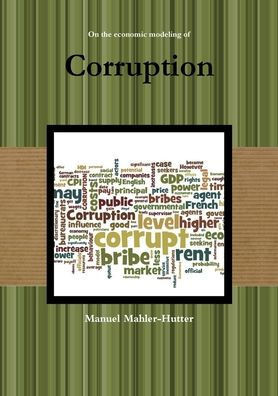
This work discusses the economic literature on Corruption. I draw the distinction between market- and parochial corruption. The institutions and the corrupt contract are the base of the following analysis. Corruption happens within a Principal-Agent relationship. Corruption may flourish if economic rents exist, the costs of corruption are low or if the agents have large discretionary power. I discuss whether corruption always has to have negative influence on economic efficency. The empirical part analysis the influence of certain determinantson the CPI. The main findings are: - Corruption can be reduced by increasing the availability of means of communication to a large part of the citizens. - Higher political interest may lead to less corruption due to increased sensitivity towards authority's actions. - Direct regulations of the freedom of trade or entry to business increase the level of corruption; or the level of corruption decreases the ease of trading and doing business.
| Author: Manuel Mahler-Hutter |
| Publisher: Lulu.com |
| Publication Date: Aug 29, 2011 |
| Number of Pages: 92 pages |
| Binding: Paperback or Softback |
| ISBN-10: 1446687538 |
| ISBN-13: 9781446687536 |
Related Products


Createspace Independent Publishing Platform
The Obama Doctrine: Socialism, Corruption and Economic Collapse
$15.75
