

Springer
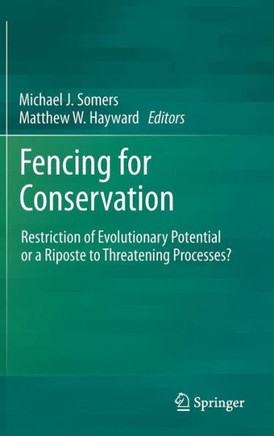
Fencing for Conservation: Restriction of Evolutionary Potential or a Riposte to Threatening Processes?
Product Code:
9781461409014
ISBN13:
9781461409014
Condition:
New
$180.44

Fencing for Conservation: Restriction of Evolutionary Potential or a Riposte to Threatening Processes?
$180.44
The conflict between increasing human population and biodiversity conservation is one of the IUCN's key threatening processes. Conservation planning has received a great deal of coverage and research as a way of conserving biodiversity yet, while theoretically successful, it has never been tested. Simple lines on maps to illustrate conservation areas are unlikely to be successful in the light of human encroachment. It may be that some form of overt display is necessary to ensure the protection of reserves. This may be signage, presence of guards/rangers or physical fencing structures. The need for some form of barrier goes beyond restricting human access. The megafauna of Africa pose a genuine threat to human survival. In southern Africa, fences keep animals in and protect the abutting human population. Elsewhere, fencing is not considered important or viable. Where poverty is rife, it won't take much to tip the balance from beneficial conservation areas to troublesome repositories of crop-raiders, diseases and killers. Conversely, in New Zealand fences are used to keep animals out. Introduced species have decimated New Zealand's endemic birds, reptiles and invertebrates, and several sites have been entirely encapsulated in mouse-proof fencing to ensure their protection. Australia faces the same problems as New Zealand, however surrounds its national parks with cattle fences. Foxes and cats are free to enter and leave at will, resulting in rapid recolonisation following poisoning campaigns. How long will these poison campaigns work before tolerance, aversion or resistance evolves in the introduced predator populations?
| Author: Michael J. Somers |
| Publisher: Springer |
| Publication Date: Nov 22, 2011 |
| Number of Pages: 320 pages |
| Binding: Hardback or Cased Book |
| ISBN-10: 1461409012 |
| ISBN-13: 9781461409014 |
Related Products