

Createspace Independent Publishing Platform
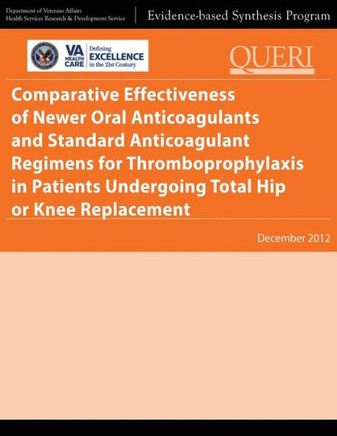
Comparative Effectiveness of Newer Oral Anticoagulants and Standard Anticoagulant Regimens for Thromboprophylaxis in Patients Undergoing Total Hip or
Product Code:
9781484893821
ISBN13:
9781484893821
Condition:
New
$20.09
Comparative Effectiveness of Newer Oral Anticoagulants and Standard Anticoagulant Regimens for Thromboprophylaxis in Patients Undergoing Total Hip or
$20.09
Venous thromboembolic (VTE) events are important causes of morbidity in elective total hip replacement (THR) and total knee replacement (TKR) procedures, which are being performed with increasing frequency in an aging population. Because of the substantial risk of VTE, current guidelines recommend thromboprophylaxis in patients undergoing THR or TKR. Low molecular weight heparin (LMWH) and adjusted-dose warfarin are the most commonly used anticoagulants for thromboprophylaxis in the United States, but a number of pharmacological treatment options are available including unfractionated heparin, aspirin, and newer oral anticoagulants. These drug classes differ in practical applications such as a predictable dose response and the need for laboratory monitoring, oral versus injection administration, dosing frequency, drug-drug interactions, and the availability of an appropriate reversal mechanism in case of over anticoagulation. In addition, mechanical thromboprophylaxis, most frequently used in combination with anticoagulants, is commonly used in the United States. Risk factors for VTE include venous stasis, endothelial injury, and hypercoagulability. Venous stasis can result from the positioning of the limb, localized postoperative swelling, or limited mobility in the postoperative period. Endothelial injury can result from positioning and manipulation of the limb. Markers of thrombin generation, indicating hypercoagulability, have been shown to be elevated in total hip arthroplasty. Prior to 1980, rates of symptomatic VTE were 15 to 30 percent. However, changes in surgical care, including earlier ambulation, and changes to surgical technique that are less invasive and possibly less thrombogenic have decreased the rate of symptomatic VTE. A recent analysis that incorporated data from trials and observational studies estimated the contemporary 35-day rate of symptomatic VTE without thromboprophylaxis at 4.3 percent. Pharmacological thromboprophylaxis for THR or TKR surgery decreases VTE by approximately 50 percent but with the tradeoff of increased bleeding. Surgical procedures may also increase bleeding risk; major bleeding is estimated to occur in 1.5 percent of patients undergoing THR or TKR, even without thromboprophylaxis. The risk of bleeding is a concern because bleeding can lead to infections, reoperation, delayed wound healing, and extended hospital stay. Considering both benefits and risks, guideline panels have issued moderate to strong recommendations for thromboprophylaxis in patients without a contraindication. The choice of which antithrombotic thus becomes pivotal for balancing the prevention of thromboembolism with the risk of bleeding. Given the emerging data on new oral anticoagulants, this report was commissioned by the VA to examine the following key questions (KQs): KQ 1. For patients undergoing total hip or total knee replacement, what is the comparative effectiveness of newer oral anticoagulants and standard drug classes (low molecular weight heparin, injectable factor Xa inhibitors, unfractionated heparin, warfarin, aspirin) on the incidence of symptomatic, objectively confirmed venous thromboembolism (VTE), other VTE events, total mortality, and bleeding outcomes? KQ 2. For patients undergoing total hip or total knee replacement, what are the effects of combined pharmacological and mechanical modalities versus pharmacological treatment alone on the incidence of symptomatic, objectively confirmed VTE, other VTE events, total mortality, and bleeding outcomes? KQ 3. For patients undergoing total hip or total knee replacement, what is the comparative efficacy of individual newer oral anticoagulants on the incidence of symptomatic, objectively confirmed VTE, other VTE events, total mortality, and bleeding outcomes?
| Author: Health Services Research Service |
| Publisher: Createspace Independent Publishing Platform |
| Publication Date: May 04, 2013 |
| Number of Pages: 66 pages |
| Binding: Paperback or Softback |
| ISBN-10: 1484893824 |
| ISBN-13: 9781484893821 |
Related Products

Sale 5%