


Createspace Independent Publishing Platform
Interpreting Mark: Christianity without an historical Christ
Product Code:
9781491040546
ISBN13:
9781491040546
Condition:
New
$17.52
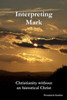
Interpreting Mark: Christianity without an historical Christ
$17.52
The ancient Greeks had a concept of the logos (or divine reason) that we simply do not share. In his book, "Mathematics Useful for Understanding Plato", the second century mathematician Theon of Smyrna wrote:
"One represents the principle of Unity from which all things arise. Two, the Dyad, represents Duality. This is the beginning of multiplicity and of strife, but is also the possibility of logos, denoting the relation of one thing to another"
For the Jewish author, Philo of Alexandria, the logos was part a universal tripartite soul, the origin of the Holy Trinity.
For the ancient Greeks the soul (or psyche or mind) of each one of us also has a tripartite nature.
These ideas helps us to understand our relationships to one another.
Psychological fractures arise when an aspect of the individual tripartite soul is out of tune with an aspect of the universal tripartite soul. Each fracture has a specific nature and is represented by six characters within the Galilean healing miracles in the gospel according to Mark.
It is beautiful; it is simple; it is elegant; it is never taught.
Social fractures arise when as a result of our fractured soul, our behavior has a detrimental impact on others. Again each fracture has a specific nature and is represented by six players within the Passion narrative in the gospel according to Mark.
It is beautiful; it is simple; it is elegant; it is never taught.
This interpretation of the gospel is not taught for religious reasons. For the author of the gospel according to Mark, Jesus Christ is the personification of the logos. For the Church, Jesus Christ is the incarnate God, "a man like us in all things but sin", who in the words of the Nicene Creed:
"became incarnate from the Virgin Mary, and was made man"
and
"For our sake .. was crucified under Pontius Pilate"
and
".. suffered death and was buried"
and
"On the third day .. rose again"
The Church's doctrine obscures the real underlying message within the gospel:
Christ didn't die for our sins in a sacrificial act of atonement.
Christ dies because of our sins in the here and now, every day.
Christ wasn't resurrected in a miraculous reconstitution of tissue and bone.
Christ is resurrected in our healing and inspirational words and actions in the here and now, every day.
Christ is part of a divine Trinity that is not beyond human understanding but is born from an understanding of what it is to be human.
For good or for ill, the world we live in is created by our words and actions. The calling for any follower of the divine reason, personified by Jesus Christ, is that in our day to day lives, we embody that voice of true authority and play a part in shaping it.
Using the philosophical writings of Plato and Philo, the historical writings of Suetonius, Tacitus, Eusebius and Josephus, the theological writings of the non-canonical gospel of Thomas, the Mandean Book of John and the Dead Sea scrolls, New Testament writings including above all, the gospel of Mark and the ancient Greek idea of a tripartite soul this book uncovers an alternative explanation for the origin of Christianity and it's continued relevance to us today.
dominick.garden@gmail.com
| Author: Dominick Garden |
| Publisher: Createspace Independent Publishing Platform |
| Publication Date: Jul 25, 2013 |
| Number of Pages: 350 pages |
| Binding: Paperback or Softback |
| ISBN-10: 1491040548 |
| ISBN-13: 9781491040546 |
Related Products

Independently Published
Christian Doctrine Without Contradiction: The Bride Of Christ - 9781983220296
$10.66

