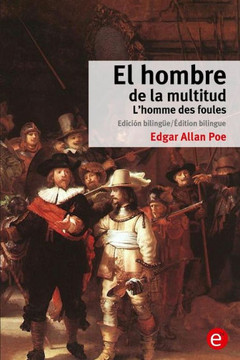
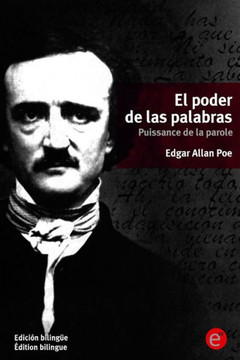
El relato se inicia con la siguiente cita del moralista franc?s Jean de la Bruy?re: "Ce grand malheur, de ne pouvoir ?tre seul", tomada de su obra Caract?res. Dicha cita puede traducirse: Qu? gran desgracia la de no poder estar solo. La misma cita puede encontrarse en el primer cuento de Poe, Metzengerstein. Tras superar una enfermedad no definida, el narrador pasa el tiempo en un caf? londinense. Fascinado por la multitud que observa pasar a trav?s de la ventana, considera los distintos tipos y personajes (nobles, amanuenses, comerciantes, abogados...), y el aislamiento a que est?n sometidos, a pesar de vivir api?ados en la gran ciudad. Al caer la tarde, el narrador se fija en a decrepit old man, some sixty-five or seventy years of age (un anciano decr?pito de unos sesenta y cinco o setenta a?os). Era de escasa estatura, flaco y aparentemente muy d?bil. Vest?a ropas tan sucias como harapientas. El narrador, lleno de curiosidad, decide dejar el caf? y seguir a este hombre. ?ste conduce al narrador por tiendas y comercios, sin comprar nunca nada, hasta acabar en una zona muy pobre de la ciudad, para regresar otra vez al coraz?n de la misma. La persecuci?n se prolonga a lo largo de toda la noche y todo el d?a siguiente. Finalmente, exhausto, el narrador se enfrenta cara a cara al extra?o anciano, quien, sin darse cuenta de haber sido seguido, pasa de largo. El narrador sospecha, al verlo perderse de nuevo entre la multitud, que debe de ser un terrible criminal, llam?ndolo el hombre de la multitud. The story is introduced with the epigraph "Ce grand malheur, de ne pouvoir ?tre seul" - a quote taken from The Characters of Man by Jean de La Bruy?re. It translates to This great misfortune, of not being able to be alone. This same quote is used in Poe's earliest tale, "Metzengerstein". After an unnamed illness, the unnamed narrator sits in an unnamed coffee shop in London. Fascinated by the crowd outside the window, he considers how isolated people think they are, despite "the very denseness of the company around". He takes time to categorize the different types of people he sees. As evening falls, the narrator focuses on "a decrepit old man, some sixty-five or seventy years of age", whose face has a peculiar idiosyncrasy, and whose body "was short in stature, very thin, and apparently very feeble" wearing filthy, ragged clothes of a "beautiful texture". The narrator dashes out of the coffee shop to follow the man from afar. The man leads the narrator through bazaars and shops, buying nothing, and into a poorer part of the city, then back into "the heart of the mighty London". This chase lasts through the evening and into the next day. Finally, exhausted, the narrator stands in front of the man, who still does not notice him. The narrator concludes the man is "the type and genius of deep crime" due to his inscrutability and inability to leave the crowds of London.
| Author: Edgar Allan Poe |
| Publisher: Createspace Independent Publishing Platform |
| Publication Date: Jul 27, 2015 |
| Number of Pages: 38 pages |
| Binding: Paperback or Softback |
| ISBN-10: 1515253546 |
| ISBN-13: 9781515253549 |