

MDPI AG
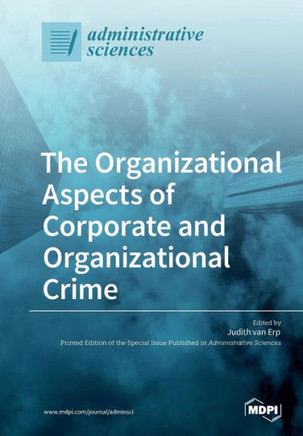
The Organizational Aspects of Corporate and Organizational Crime
Product Code:
9783038972587
ISBN13:
9783038972587
Condition:
New
$55.40
$45.34
Sale 18%
The Organizational Aspects of Corporate and Organizational Crime
$55.40
$45.34
Sale 18%
Corporate crimes seem endemic to modern society. The newspapers are filled
on a daily basis with examples of financial manipulation, accounting fraud, food
fraud, cartels, bribery, toxic spills and environmental harms, corporate human
rights violations, insider trading, privacy violations, discrimination, corporate
manslaughter or violence, and, recently, software manipulation. Clearly, the
problem of corporate crime transcends the micro level of the individual 'rotten
apple' although corporate crimes are ultimately committed by individual
members of an organization, they have more structural roots, as the enabling
and justifying organizational context in which they take place plays a defining
role. Organizations provide individuals with positions, incentives, networks, rules,
routines, perceptions and beliefs, that structure the opportunities for crime. Thus,
organizational factors can explain how misconduct in organizations is defined,
perceived, normalized, organized, and facilitated on the one hand, and controlled
and prevented on the other hand.
Organization studies have a long tradition of studying misconduct and deviance in
organizational contexts. This Special Issue of Administrative Sciences focuses on
the organizational and administrative aspects of a broad spectrum of corporate
and organizational crimes.
| Author: Judith Van Erp |
| Publisher: Mdpi AG |
| Publication Date: Oct 11, 2018 |
| Number of Pages: 152 pages |
| Binding: Paperback or Softback |
| ISBN-10: 3038972584 |
| ISBN-13: 9783038972587 |
Related Products


Createspace Independent Publishing Platform
A Police Organizational Model for Crime Reduction
$16.64