


Springer
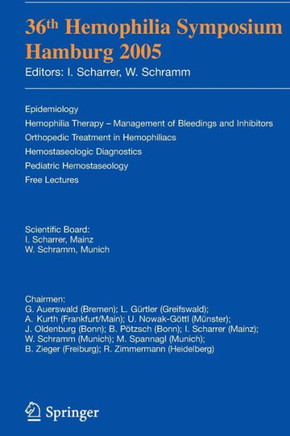
36th Hemophilia Symposium Hamburg 2005: Epidemiology; Hemophilia Therapy - Management of Bleedings and Inhibitors; Orthopedic Treatment in Hemophiliac
Product Code:
9783540367147
ISBN13:
9783540367147
Condition:
New
$180.44

36th Hemophilia Symposium Hamburg 2005: Epidemiology; Hemophilia Therapy - Management of Bleedings and Inhibitors; Orthopedic Treatment in Hemophiliac
$180.44
About 31% of the patients with a factor VIII replacement therapy develop a factor VIII inhibitor.From these are 23% low-responder ( 5BE) [8].In the case of severe hemophilia B, about 10.5% of the patients develop inhibitory antibodies [9]. Anti-factor VIII-antibodies are also seen in 15-78% healthy people without hemophilia [7, 17, 19]. Lacroix-Desmazes et al. [10, 11] showed anti-idiotypic antibodies neutralizing the inhibitory activity of the an- factor VIII antibodies in healthy people. Well-known predisposing factors for inhibitor formation are genetic features of factor VIII, which include large deletions, nonsense mutations or intrachromosomal recombinations [5, 23].Also, ethnic groups other than Caucasians (e.g.Africans) have a higher risk of developing inhibitors.Other risk factors are presumably de- ved from the immune system. For instance, a reduction of the inhibitor was seen with lower CD4+ T helper cell counts in HIV positive hemophilic patients [3,4].The development of inhibitors is very likely to be a Th-2 mediated event where cyto- nes and their receptors, T-cell receptors and the Major Histocompatibility Complex may also play an important role. Theoretical Background The substituted factor is an unknown protein for patients with a severe he- philia. Fig. 1. The normal immunoresponse (according to BAENKLER [2]) Abbreviations: TCR - T cell-receptor; APC - antigen presenting cell 36 I.Wieland et al.
| Author: G. Auerswald |
| Publisher: Springer |
| Publication Date: Nov 02, 2006 |
| Number of Pages: 319 pages |
| Binding: Paperback or Softback |
| ISBN-10: 3540367144 |
| ISBN-13: 9783540367147 |
Related Products


