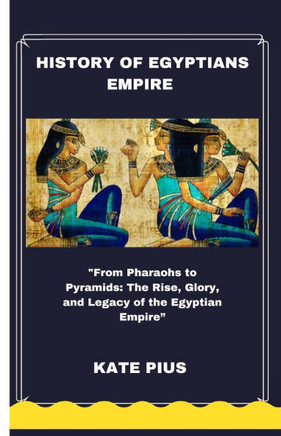
Egyptian Empire Overview Egypt's three millennia of majesty, invention, and consistency fascinate. Egyptian civilization was one of the greatest and longest. With its fertile Nile River, the monarchy produced a complex culture with great building, governance, art, and religion. The Egyptian Empire created some of the first civilisations and left a fascinating legacy. First pharaoh Narmer (Menes) unified Upper and Lower Egypt in 3100 BCE, founding the Egyptian Empire. This merger established a centralized state with a well-organized political system and a powerful monarchy that symbolized the pharaohs' divinity. Natural highways like the Nile River provided communication, trade, and troop mobility, solidifying imperial power. The Egyptian Empire relied on the annual Nile River inundation, which washed nutrient-rich silt into floodplains and made agriculture possible. This agricultural abundance supported a large and growing population and provided surplus resources for a sophisticated society with specialized workers, trading networks, and massive building undertakings. Nile floods made Egypt a sophisticated nation with achievements in arithmetic, medicine, engineering, and astronomy. The "Age of the Pyramids."-the Old Kingdom-is famous in Egyptian history. The pyramids of Giza, especially Khufu's Great Pyramid, are most famous from 2686 BCE to 2181 BCE. Ancient Egyptian engineering, religion, and organization are shown in the pyramids. Pharaohs, superhuman creatures that could enter the afterlife, were buried in these gigantic structures. The pyramids' construction required enormous personnel and resource coordination, showcasing Egypt's power and ability. The Egyptian Empire declined and fragmented. After the Old Kingdom, nomarchs, provincial rulers, acquired power during the First Intermediate Period, which witnessed political upheaval and central authority collapse. From 2181 to 2055 BCE, huge building endeavors collapsed and the empire divided into separate countries. Egyptian civilisation survived this turmoil and reunified under the Theban rulers, creating the Middle Kingdom. The Middle Kingdom, from 2055 to 1650 BCE, was an Egyptian renaissance.
| Author: Kate Pius |
| Publisher: Independently Published |
| Publication Date: Oct 02, 2024 |
| Number of Pages: 112 pages |
| Binding: Paperback or Softback |
| ISBN-10: NA |
| ISBN-13: 9798341019294 |