


Independently Published
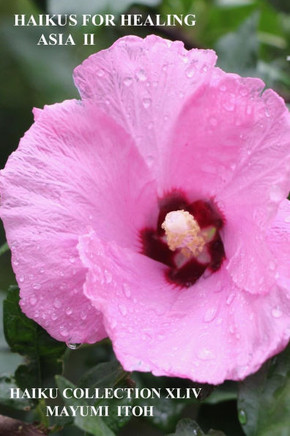
Haikus for Healing: Asia II
Product Code:
9798341334601
ISBN13:
9798341334601
Condition:
New
$14.93
Haikus for Healing: Asia II
$14.93
The history of East Asia in the first half of the 20th century was marked by tragedies of war. Japan first expanded its sphere of influence to the Korean peninsula via the first Sino-Japanese War (1894-1895), in which Qing-dynasty China lost suzerainty over Korea, and then by the Russo-Japanese War (1904-1905), in which Russia recognized Japan's claims to Korea. This led to Japan's annexation of Korea in 1910.
The consequences were beyond description. Korean men were conscripted into the Japanese Army and were 'drafted' as forced laborers in arsenals and mines in Japan, while Korean women were used as "comfort women" at the warfront.
The aftermath of Japanese wartime actions still affects Japan-Korea relations today. For instance, the compensation of the former Korean laborers and soldiers has been a bitter issue between Japan and South Korea. The erection of a memorial monument for comfort women in San Francisco in 2017 resulted in breaking the city's sister city relationship with Osaka, which had been established in 1957.
Meanwhile, in the 1970's and 1980's, North Korea abducted Japanese citizens, whose number ranged from several dozens to several hundreds. Of these, the Japanese government officially identified 17 Japanese as abductees by the North Korean government, while the latter acknowledged 13 as such. Thus far, only five of them were repatriated in 2002.
One of the symbolic and unresolved cases involves the abduction of a 13-year-old schoolgirl, Yokota Megumi, who disappeared in Niigata on November 15, 1977, on her way back from school. North Korean leader Kim Jong Il acknowledged in 2002 that Yokota was one of the 13 abductees by North Korean agents but stated that she had committed suicide in 1993. With the testimony of witnesses who saw her alive in 1994, North Korea changed the date to 1994. Then in 2004, North Korea returned Yokota's bones to Japan, but DNA tests showed that the bones were not Yokota's. The sufferings and wounds of the victims of World War II still deeply resonate in the hearts of the survivors and their kin today. These experiences should not be buried in the vault of history. Reconciliation and healing from these wounds begin with acknowledgement of the truth. Upon recognition of the true facts, one can learn lessons so as not to repeat the same tragedies and move forward.
The essence of haiku is to elevate one's feelings to a more objective and larger perspective. This mental engagement can facilitate one to embrace empathy for victims of tragedies and can serve as a healing process for the victims.
With this in mind, this haiku collection examines Japan-Korea relations in contemporary history and expresses them in a form of concise poetry with annotations. Specifically, this haiku anthology presents 91 haikus originally written by the author with appropriate season words per the Japanese calendar.
The consequences were beyond description. Korean men were conscripted into the Japanese Army and were 'drafted' as forced laborers in arsenals and mines in Japan, while Korean women were used as "comfort women" at the warfront.
The aftermath of Japanese wartime actions still affects Japan-Korea relations today. For instance, the compensation of the former Korean laborers and soldiers has been a bitter issue between Japan and South Korea. The erection of a memorial monument for comfort women in San Francisco in 2017 resulted in breaking the city's sister city relationship with Osaka, which had been established in 1957.
Meanwhile, in the 1970's and 1980's, North Korea abducted Japanese citizens, whose number ranged from several dozens to several hundreds. Of these, the Japanese government officially identified 17 Japanese as abductees by the North Korean government, while the latter acknowledged 13 as such. Thus far, only five of them were repatriated in 2002.
One of the symbolic and unresolved cases involves the abduction of a 13-year-old schoolgirl, Yokota Megumi, who disappeared in Niigata on November 15, 1977, on her way back from school. North Korean leader Kim Jong Il acknowledged in 2002 that Yokota was one of the 13 abductees by North Korean agents but stated that she had committed suicide in 1993. With the testimony of witnesses who saw her alive in 1994, North Korea changed the date to 1994. Then in 2004, North Korea returned Yokota's bones to Japan, but DNA tests showed that the bones were not Yokota's. The sufferings and wounds of the victims of World War II still deeply resonate in the hearts of the survivors and their kin today. These experiences should not be buried in the vault of history. Reconciliation and healing from these wounds begin with acknowledgement of the truth. Upon recognition of the true facts, one can learn lessons so as not to repeat the same tragedies and move forward.
The essence of haiku is to elevate one's feelings to a more objective and larger perspective. This mental engagement can facilitate one to embrace empathy for victims of tragedies and can serve as a healing process for the victims.
With this in mind, this haiku collection examines Japan-Korea relations in contemporary history and expresses them in a form of concise poetry with annotations. Specifically, this haiku anthology presents 91 haikus originally written by the author with appropriate season words per the Japanese calendar.
| Author: Mayumi Itoh |
| Publisher: Independently Published |
| Publication Date: Oct 06, 2024 |
| Number of Pages: 244 pages |
| Binding: Paperback or Softback |
| ISBN-10: NA |
| ISBN-13: 9798341334601 |
Related Products

Sale 12%


