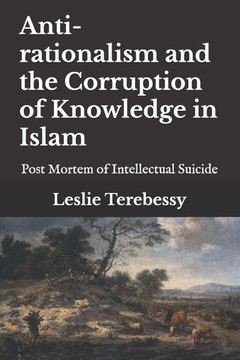
Is Islam as articulated by exegetes the Islam of the Quran? Or are there differences between the two? A few differences are perceptible. Under the influence of traditions and politics, Islam became
traditional and
political. The prophet followed the Book of Allah. The prophet did not follow books of
traditions. However, the umma adheres to books of traditions and the rulings of clerics. In a few areas, the umma is receiving conflicting messages. The Book of Allah relays a teaching of peace but militant ulama relay a teaching of war. How did this happen? It happened as a result of the politicization of the epistemology of revelation, specifically by recourse to the teaching of the abrogation of all verses that teach reconciliation by the verse of the sword. The transformation of Islam was due to political pressure to re-articulate Islam to justify waging unlawful wars of territorial expansion. The process was buttressed by a turn from revelation to hawkish traditions. The books of traditions were recorded in defiance of the prohibition by Allah of "adding" to revelation. The prophet also prohibited recording and reporting the traditions attributed to him. The politicization of the epistemology of revelation was enabled by the repression of reason and the putative abrogation of verses that teach reconciliation by the verses of the sword. The repression of reason was justified by asserting that using reason to understand revelation is
kufr. This discourages Muslims from using reason in religion. As a result, Muslims do not understand revelation well. Refraining from the engagement of reason to understand revelation rendered the umma bereft of reason. Treating the traditions of the forefathers, recorded in the books of traditions, as "revelation" is an error. Treating tradition as a "part of" revelation is tantamount to treating tradition as a "partner" of revelation. Treating traditions as "revelation" enabled a further error, the
subordination of revelation to tradition. This was tantamount to treating the authority of persons as greater than the authority of Allah. Tradition was treated as a "judge" of revelation. It was asserted that tradition could "abrogate" and even "replace" parts of revelation. The death penalties for adultery, apostasy and blasphemy are examples of rulings superseded by rulings from traditions. Renewal requires rejecting Islamism and returning to the teaching in the Book of Allah. It also requires the rehabilitation and re-engagement of reason to understand revelation. Politicized epistemology, necessitated to reinterpret revelation to justify waging wars of aggression
corrupted the knowledge of revelation. The umma suffers because as a result of politicized exegesis and jurisprudence, which bequeathed to it a tainted, politicized version of Islam. Traditionalism treats traditions as revelation (
tanzil). This breaches monotheism, which teaches that revelation is from God and not from persons. The teaching of the duality of revelation embedded within what passes for traditional Islam the duality of divinity, and thus tainted the purity of the faith. The corruption of knowledge was reinforced and etched in the consciousness of Muslims be recourse to a culture of conformism known as
taqlid or the unquestioning following of the work of clerics. These accretions corrupted the knowledge of revelation which explains the trauma experienced by the umma. Renewal will require freeing the knowledge of revelation of all unwarranted accretions, including the teaching of predestination, the repression of reason, the subordination of revelation to tradition and the teaching of abrogation. The umma should return to the Book of Allah and refrain from treating tradition as revelation. For it is hardly possible to postulate a duality of revelation without postulating a duality of divinity.
| Author: Leslie Terebessy |
| Publisher: Independently Published |
| Publication Date: Jan 19, 2023 |
| Number of Pages: 102 pages |
| Binding: Paperback or Softback |
| ISBN-10: NA |
| ISBN-13: 9798374281217 |