


Independently Published
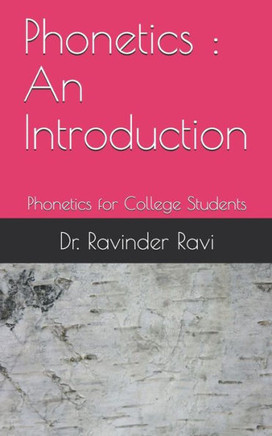
Phonetics: An Introduction: Phonetics for College Students
Product Code:
9798612348627
ISBN13:
9798612348627
Condition:
New
$13.21

Phonetics: An Introduction: Phonetics for College Students
$13.21
The Arab grammarians studied the sounds of Arabic in a very systematic (scientific) way. Their main purpose was to preserve the correct pronunciation of the Quran (Qoran, Koran) and to prevent it from any mispronunciation. They described the sounds and also gave detailed descriptions of the organs of speech. As early as in the beginning of the 4th century B.C. the grammarians of Greece and China studied the sounds of their respective languages. Before them an Indian grammarian named Panini also studied the sounds of Sanskrit (c. 5th century B.C.) at the University of Taxila. He is said to be the first phonetician. Their descriptions are very much like what we study today in general phonetics.Phonetics studies the speech (or human, because animal sounds cannot be called so although their sounds may have certain meanings) sounds of the languages of the world. Phonetics is divided into three branches on the basis of the three stages of speech production (articulation), transmission and reception, which is known as the speech chain.Articulatory → Acoustic→Auditory1.ARTICULATORY PHONETICS: This branch deals with the physiological stage of speech production. The speaker's speech organs move in a specific way for every sound. This stage of phonetics studies these movements. It shows how each sound is articulated (produced).2.ACOUSTIC PHONETICS: This branch deals with the physical stage of speech transmission. The acoustic stage follows the articulatory stage. The sounds produced by the speaker disturb the air and cause sound waves like the waves of water in a lake or a sea. Every speech sound has a different sound wave from the other. This stage of phonetics studies these sound waves. It examines them and gives their characteristics.3.AUDITORY PHONETICS: This branch studies the physiological stage of speech reception. The hearer's auditory organs receive sound waves which travel through the sensory nerves to the brain and the brain understands the sound waves as the sounds of the language (linguistic form). This stage is difficult to understand because some parts of this system are still a mystery to science.For our study articulatory phonetics is the most important. Therefore, we shall study how speech sounds are produced.In speech production more than half of our body is needed and used. Different organs of our body come into action while producing speech sounds. The lungs, the muscles of the chest, the larynx, the lips, the mouth, etc. are used to produce speech sounds. These organs are called the organs of speech.The expression (term) "organs of speech" is not very suitable because all these organs are not used primarily for speech. They have functions other than the production of speech. The lungs are necessary for breathing, the teeth are used for chewing food, the tongue is needed for the difference in tastes, etc. But for want of a better expression, the phoneticians continue to call them the organs of speech.
| Author: Ravinder Ravi |
| Publisher: Independently Published |
| Publication Date: Feb 10, 2020 |
| Number of Pages: 134 pages |
| Binding: Paperback or Softback |
| ISBN-10: NA |
| ISBN-13: 9798612348627 |
Related Products



Createspace Independent Publishing Platform
English to Pashto Dictionary with Phonetics: Pashto dictionary with phonetics
$34.99

Interfaces of Phonetics
$188.05