

Independently Published
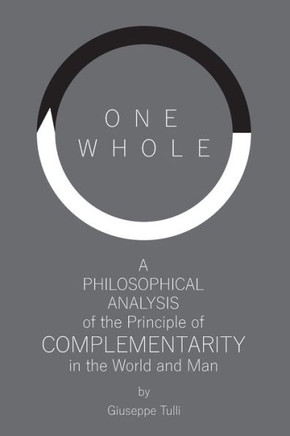
One Whole: A Philosophical Analysis of the Principle of Complementarity in the World and Man
Product Code:
9798643802037
ISBN13:
9798643802037
Condition:
New
$17.72

One Whole: A Philosophical Analysis of the Principle of Complementarity in the World and Man
$17.72
It is a most deep-seated intuition that the world simply is, or that it's the realm of the sheer being of things. Thus, with Hamlet, it also intuitively makes sense to wonder, even regarding man as a being in the world, whether "to be, or not to be". But modern Quantum Mechanics, against all intuition, has found that in the sub-atomic world there are no things as "particles" or "waves", but their "superposition" as fundamental "states"; that is, as though they were "statements" about "particles" and "waves". Is this a derailment from good common sense? More generally, things are intuitively seen as finite or discrete, hence presupposing the in-finite or continuous. But nothing is absolutely discrete or absolutely continuous. Or nothing is absolutely in-divisible, or else absolutely divisible. For example, cells are made up of molecules, and molecules of atoms, and atoms of sub-atomic "wave/particles". Every thing can thus be seen as a harmonious unity of its fundamental principles, from which it's integrated, and into which it dis-integrates. There's the "state" of unity, or being one discrete thing; and the "state" of wholeness, or being a whole continuum of divisible principles. In sum, one and whole are the ultimate "states" of the world, and their "superposition", what the world really is. And these are therein "statements" about things, as though the world were, not only "being", but the "mirror of being". In classical terms, the world is really a "cosmic mind", and thereby even capable of "thinking itself" as a "universal mind". Actually, if the world were just "being", how, or why, there's ultimately a "universal mind" in it, e.g. like the mind of man? On the other hand, if the world can "think itself" then it can completely "mirror", or "know", itself. Or the question of how or why the world is, is completely answerable by the world itself as a "universal mind". Needless to say, and by quoting Nietzsche, the "death of God", and then even the ultimate meaning of man as a "universal mind", are at stake with the question of complementarity. Is it then really the ultimate principle of the world?
| Author: Giuseppe Tulli |
| Publisher: Independently Published |
| Publication Date: 44005 |
| Number of Pages: 334 pages |
| Binding: Philosophy |
| ISBN-10: |
| ISBN-13: 9798643802037 |
Related Products